 Golden Sprouts
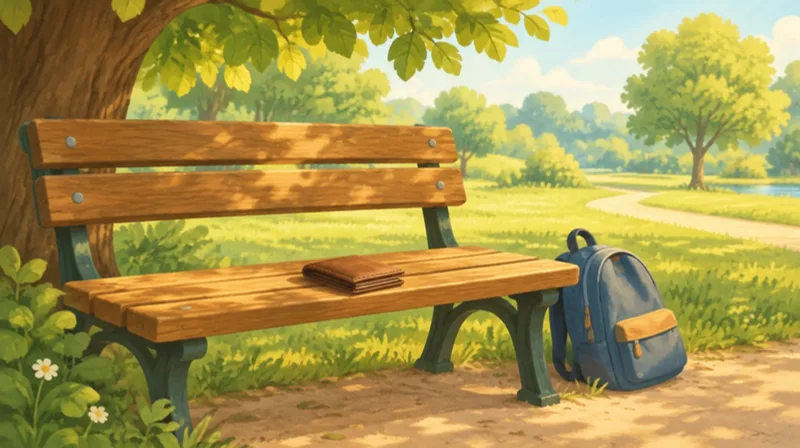
Yaseen left school and walked through the park, as he did every day. On a wooden bench under the tree, he saw a brown wallet.
He looked around and saw no one. He opened the wallet and found a lot of money, and a card with a man's name and phone number.
Yaseen remembered the bicycle he had been wishing for, for months. The money in his hand was enough to buy it, and more.
Then he said to himself, This money is not mine. And its owner is looking for it right now.
He hurried home and told his mother. She called the number, and half an hour later an elderly man arrived. This is my whole month's pension,
he said. I did not know how I was going to buy my medicine.
The man took out a banknote and held it out to Yaseen. Yaseen said, Thank you, sir, but I can't take a reward for giving back what was never mine.
The man prayed for him and went on his way. That night Yaseen slept peacefully, and he did not think about the bicycle.
What we learned
What we find is not ours. We return it to its owner, even when no one is watching.
Questions for your child
- Where did Yaseen find the wallet?
- Why was the money so important to its owner?
- What would you do if you found something at school that isn't yours?
Growing with the story
I choose what helps and harms no one, even when nobody can see me.
Yaseen wanted two things at once: the bicycle, and to stay honest. That is called feeling torn, and everyone feels it before a hard decision.
Look in your room or your bag for something you borrowed and never gave back: a pen, a book, a toy. Return it today and say thank you.
The lost-and-found box: a box by the front door where everyone puts things they find that aren't theirs. At the end of the week, we look for the owners together.
Parents' corner
A story does more when the child does the talking. Three questions are enough:
- Before reading
If you found something valuable in the street, what is the first thing you would think of?
Listen, and don't correct.- While reading
- Pause when Yaseen remembers the bicycle and ask:
What do you think he will do? Why?
- After reading
What was the hardest moment for Yaseen?
Then:Has something like that ever happened to you?
Instead ofYou're such an honest boy.
SayI saw you give the pen back to its owner even though you needed it. That wasn't easy.
Ideas we drew on
- The CASEL framework for social and emotional learning:
Responsible decision-making
is one of the five skills the framework is built on. - Dialogic reading (Grover Whitehurst): The adult asks and the child talks during the story, instead of only listening.
- Mindset, by Carol Dweck: We praise what the child did and the effort, instead of giving the child a label.